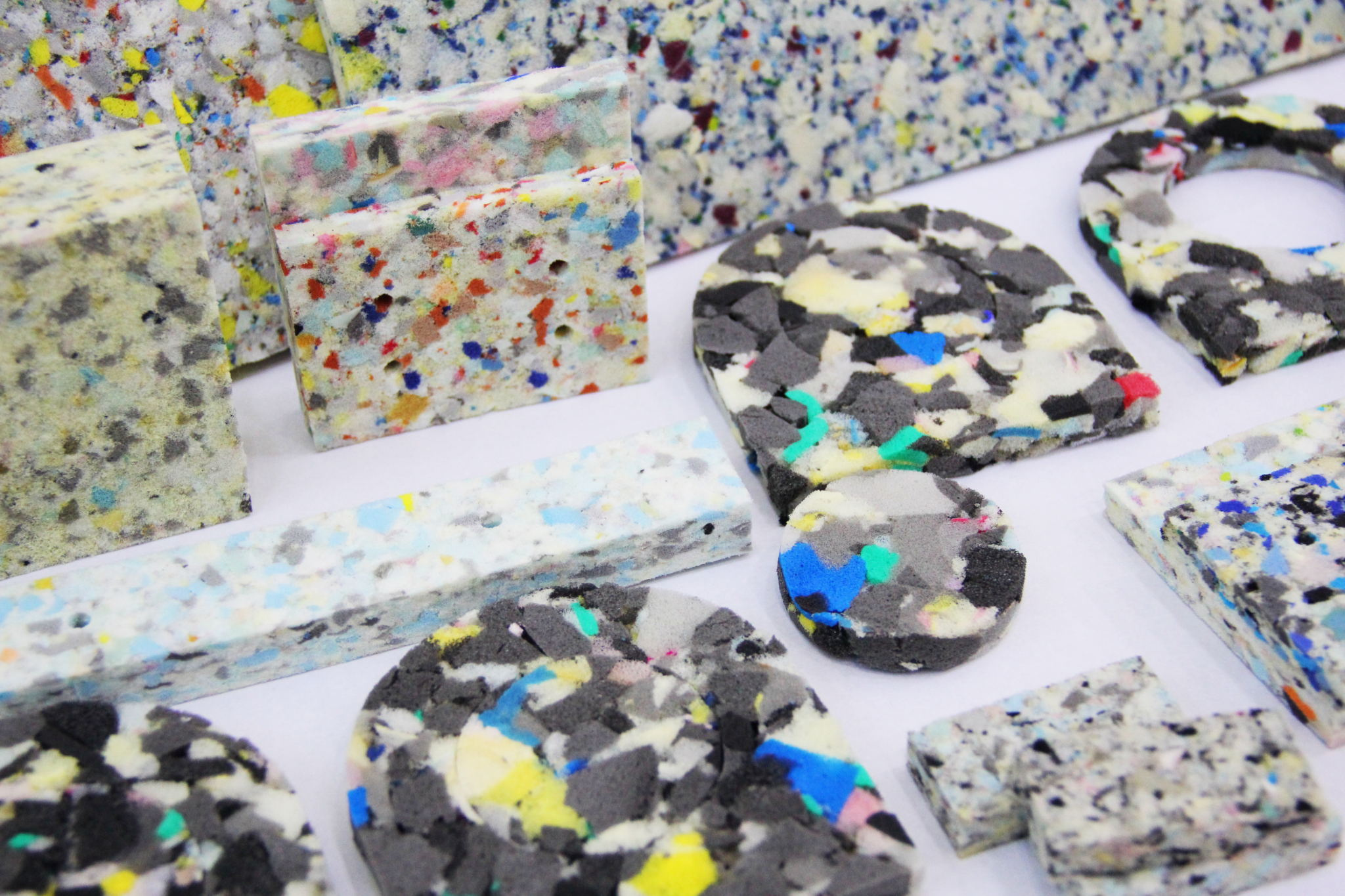
Rebond FOAM
Rebond Foam is a high-density, open-cell material engineered from recycled polyurethane foam scraps that are shredded, bonded with adhesive, and compressed into durable blocks. This manufacturing process yields a firm, resilient structure that offers excellent impact resistance, vibration damping, and long-term shape retention, making it ideal for demanding applications where conventional foams may fall short.


Description
Its robust composition and ability to withstand repeated stress make rebond foam a preferred solution across industries such as automotive, furniture, construction, sports and recreation, packaging, acoustics, and medical equipment. In automotive and industrial vehicles, rebond foam is used in seating systems, vibration filters, and sound-dampening layers to enhance comfort and reduce mechanical noise. The furniture sector relies on its firmness for ottomans, bar stools, and high-traffic seating, while construction applications include carpet underlays, wall padding, and insulation layers.
In sports and fitness environments, rebond foam is commonly found in gym flooring, weight benches, and protective mats due to its shock-absorbing and tear-resistant properties. Packaging industries utilize it for cushioning heavy or fragile items, and acoustic engineers incorporate it into soundproofing panels and vibration isolation systems. Its orthopaedic-grade firmness also supports use in mattresses, wheelchair cushions, and rehabilitation equipment.
Rebond foam is available in various densities and thicknesses, and can be fabricated through die-cutting, lamination, molding, and adhesive bonding to meet specific design and performance requirements. It is supplied in sheet, block, or custom formats and can be tailored to comply with international standards including RoHS or REACH, ensuring safety and reliability across regulated markets.